
Can You Remove a News Article About Yourself from Google?
If you’ve searched your own name and found a news article you wish didn’t exist, you’re probably wondering one simple thing: can it actually be removed? The short answer is: sometimes, but not always, and it depends on a few key factors. Let’s walk you through this, step by step, so you know exactly where you stand, and what you need to do.
The Honest Answer: Removal vs. Suppression
Before anything else, it’s important to understand two very different things: removal and suppression.
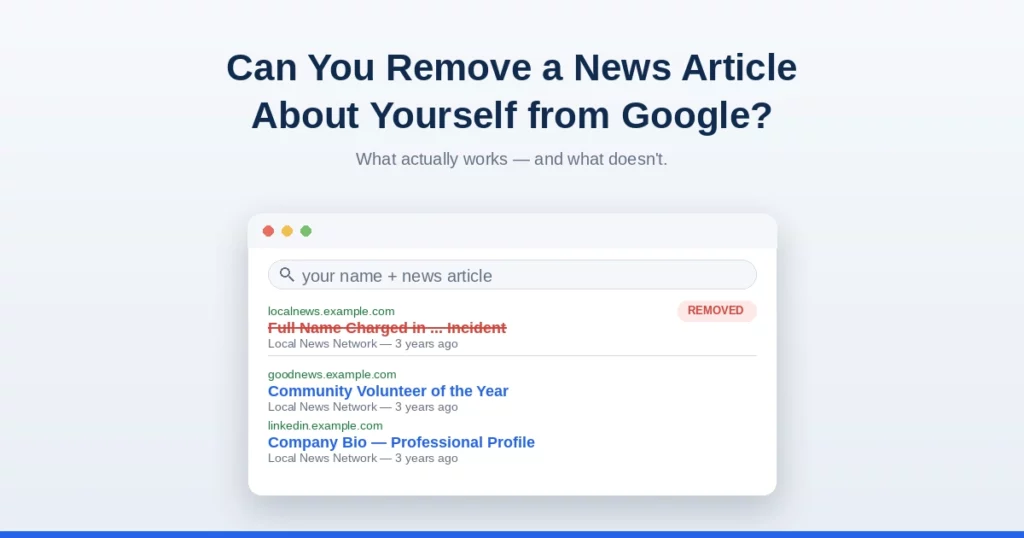
Removal means the article is completely gone. Either the publisher deletes it from their website, or in rare cases, Google agrees to delist the page from search results. Full removal is hard to get. News organizations value their published record, and Google only removes links from search in specific, limited situations.
Suppression means the article still exists, but it’s pushed down in search results so fewer people see it. Instead of showing up on page one when someone searches your name, it might end up on page three or four, where almost nobody looks.
Here’s the honest truth: most people asking “can I remove a news article about myself” end up using suppression, not removal. That’s not a failure. It’s simply how search engines and publishers work. If the article is accurate and newsworthy, no company can force it off the internet just because you don’t like it. But if it’s outdated, false, or violates your rights in a specific way, you do have real options, which we’ll cover below.
When Will Google Delist a News Article?
Google is very particular about when it will remove a link from search results. It does not remove content simply because it’s negative or embarrassing. Instead, it looks at whether the article causes specific harm. Here are the situations where Google is most likely to act:
- Your personal information is exposed. This includes your home address, phone number, medical records, financial account details, or a government ID number like a social security number.
- The article includes explicit images posted without your consent.
- The content is being used to threaten, harass, or intimidate you.
- A court has ruled the content is defamatory and ordered it removed.
- The article is about a minor legal issue that’s already been resolved, and it’s misleading people who don’t see the full picture, such as an arrest where charges were later dropped.
If your situation fits one of these, you can submit a request through Google’s Removals tool in the Search Help Center. You’ll need to provide the article’s URL and explain which category applies. Google’s team reviews each case individually, so approval isn’t guaranteed even when your situation seems to fit.
If none of these apply to you, and the article is simply unflattering or something you regret, Google is very unlikely to delist it. That’s not personal; it’s just how the policy works.
When Will the Publisher Remove an Article?
This is actually the path with the best chance of success, because it deals with the source directly. If the publisher deletes the article, it’s gone everywhere, not just hidden from Google.
Publishers are generally more willing to remove or update an article when:
- The information is factually incorrect. Reputable outlets care about accuracy and often will issue a correction or removal if you can show clear proof of an error.
- The story is old and no longer relevant. Some publishers have “right to be forgotten” style policies for old, minor stories, especially local news about small incidents.
- You were a minor at the time of the story, or the story involves sensitive personal circumstances like being a crime victim.
- The legal outcome changed after publication, such as a dismissed case or an overturned charge, and the article never got updated.
To ask for removal, contact the publisher directly through their “Contact Us” page or a listed editor’s email. Be polite, be specific, and explain exactly what you’re requesting and why. Reporters and editors respond much better to calm, respectful requests than angry demands. Keep in mind, though, that if the article is accurate and newsworthy, many publishers will decline, since removing true, published news conflicts with their editorial standards.
Legal Routes to Force Removal
In some cases, you may have real legal grounds to push for removal. This usually needs the help of a lawyer, but here’s an overview of the main paths:
Defamation. If the article contains false statements presented as fact, and those false statements damage your reputation, you may have a defamation case. This generally requires proving the information is false, not just unflattering, and that it caused real harm.
GDPR and “right to be forgotten” (mainly for EU/UK residents). Under European data protection law, individuals can request that search engines remove certain personal data from results, particularly if the information is outdated, irrelevant, or excessive. This mostly applies to people located in the EU or UK, or in some cases where the content specifically concerns them.
Copyright claims. If the article uses your copyrighted material, like your photos, videos, or original writing, without your permission, you may be able to file a copyright removal request with Google or the hosting platform.
Legal routes tend to be slower and more expensive than direct requests, but they can be effective when the article involves false information, privacy violations, or unauthorized use of your content. If you believe you have a strong legal case, it’s worth consulting an attorney who specializes in defamation or privacy law before proceeding.
How Suppression Works When Removal Isn’t Possible
If the article is accurate, doesn’t meet Google’s removal criteria, and the publisher won’t take it down, suppression becomes your best strategy. The idea is simple: build up enough positive, relevant content that it naturally outranks the negative article in search results.
Here’s how people typically do this:
- Create and strengthen your own online presence. A personal website, an active LinkedIn profile, or professional bios on industry sites all tend to rank well for name searches.
- Get featured elsewhere. Interviews, guest articles, or mentions on other reputable sites help build a wider spread of positive results.
- Stay active on social platforms. Public profiles on sites like LinkedIn, Instagram, or Twitter/X often show up high in search results and give you more control over what people see.
- Publish content regularly. A blog, portfolio, or articles related to your work or interests can steadily build authority in search engines over time.
The goal isn’t to hide the truth. It’s to make sure the full picture of who you are shows up when someone searches your name, instead of just one old story.
How Long Does It Take to Push Down a News Article?
Timelines vary quite a bit depending on which path you take.
- Publisher removal requests: If the publisher agrees, this can happen within days to a few weeks, depending on their internal review process.
- Google removal requests: Typically take a few days to a few weeks for Google to review and respond, assuming your case fits their criteria.
- Legal action: This can take months, sometimes longer, especially if it goes through formal legal proceedings.
- Suppression through positive content: This is the slowest but most reliable long-term method. Expect it to take a few months of consistent effort before you see the negative article move down in rankings, with continued work to maintain those results over time.
If your situation involves safety concerns, like harassment or exposed personal information, make sure to highlight that clearly in any request, since these cases are often prioritized.
Final Thoughts
So, can you remove a news article about yourself from Google? Sometimes, yes, especially if it’s inaccurate, outdated, or violates specific privacy or legal protections. But in many cases, full removal isn’t realistic, and suppression is the more practical path forward. The key is understanding which category your situation falls into, so you can choose the approach that will actually work, rather than wasting time on one that won’t.
If you’d like to go deeper on this topic, check out our full guide on Personal Reputation Management for a broader overview of managing your online reputation, or read How to remove negative content from Google for tips on building a strong, positive online presence.